

A practical guide for the first days after an accident involving any tourism service
When you have an accident while traveling, your first instinct is naturally to recover and get back to your normal routine as quickly as possible.
That is completely understandable.
But those days — from the moment the incident occurs until you board your flight home — are often the most important from a legal perspective. What you do, what you sign, and everything you preserve during that period can make the difference between having real options later and losing them.
This guide applies regardless of where the incident occurred: a hotel, resort, amusement park, organized excursion, tourist transportation service, or any other attraction. The basic steps are largely the same.
The Most Important Thing: Your Well-Being Comes First
Above any legal consideration, seek appropriate medical attention.
It may seem obvious, but it can also be legally significant: a properly documented medical diagnosis can be one of the most valuable pieces of evidence in a future claim.
Keep the following in mind:
- Seek medical attention even if your symptoms seem minor at the time. Some injuries or conditions may not become apparent until several hours later.
- Request and keep all documentation you receive: diagnoses, prescriptions, invoices, and medical reports.
- If you receive treatment both in Mexico and in your home country after returning, keep the records from both places.
The consistency of your medical history — from the accident through subsequent medical follow-ups — can be critical in demonstrating both the injury and its consequences.
Document the Accident Scene
If your physical condition allows you to do so, document the location where the accident occurred before anything changes.
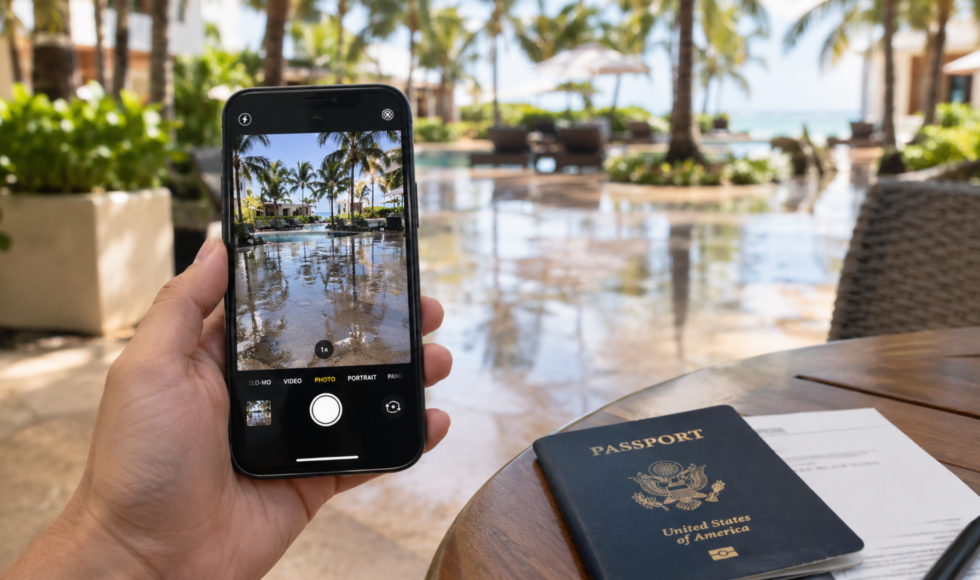
Photos and videos
Take photographs or videos of:
- a wet floor without a warning sign;
- a damaged step;
- poorly maintained facilities;
- a defective vehicle;
- an area with inadequate lighting;
- or any other condition that may have contributed to the accident.
The date and time will generally be automatically recorded in your phone’s metadata.
Document the surrounding conditions
Were there warning signs?
Were they clearly visible?
Did the area or service appear to meet basic safety conditions?
All of this can become part of the factual picture that may later need to be reconstructed.
Conditions can change within a matter of hours.
A wet floor dries. A warning sign appears where there was none before. A damaged facility gets repaired. A vehicle is taken out of service.
What is not documented at the time may be very difficult to establish later.
Identify Potential Witnesses
If other people were nearby when the accident occurred, write down their contact information.
You do not need to take a formal statement from them. For now, a name and an email address or telephone number may be enough.
Witnesses who saw what happened — or the conditions that contributed to the accident — may become important if the matter moves forward.
And locating them weeks later, after they have already returned to their home countries, may be difficult or even impossible.
The Service Provider’s Report: Request It, Review It, and Do Not Sign It Without Understanding It
When an accident occurs, the service provider — whether it is a hotel, excursion company, theme park, or transportation operator — will often prepare an internal incident report.
You have the right to request a copy.
Read it carefully before signing any document.
Pay particular attention to the following:
- Does it accurately describe the accident, or does it minimize what happened?
- Does it attribute the cause to something you did?
- Does it contain language concerning liability or settlement?
Signing a document you do not fully understand may have consequences you did not anticipate.
If the document is in Spanish and you are not fluent in the language, you have every right to ask for time to review it.
You are not required to sign it immediately.
Keep Every Receipt and Expense Record
Every expense related to the accident should be documented.
This may include:
- Emergency medical care;
- Medication;
- Transportation resulting from the injury;
- Flight or accommodation changes because you were unable to travel as originally scheduled;
- Activities or services cancelled with a penalty.
Keep invoices, receipts, and proof of payment.
If you had to change your flight because of the accident, keep the communication from the airline showing the reason for the change.
These records do more than demonstrate an actual financial loss. They can also help establish a clear timeline of what happened and its consequences.
Be Careful About What You Say — and Who You Say It To
After an accident, the service provider or its insurance company may contact you.
They may do so in a friendly and seemingly informal manner.
But any conversation about what happened, its causes, or its consequences may have legal significance.
Some practical considerations:
- Avoid providing detailed statements about the accident before consulting with an attorney.
- If someone asks you to describe what happened for a report or form, take the time necessary to clearly understand what they are asking you and why.
- Be mindful of what you post on social media about the accident. It could potentially be used against you later.
A photograph of you smiling on the beach the following day, a status update saying “I’m feeling better,” or a post thanking the hotel for its assistance could potentially be used by the other party to question the severity of your injuries or the actual impact of the accident.
This does not mean you have to stop sharing your vacation online.
It simply means you should be aware that this material could later become evidence against you.
The point is not to distrust everyone. It is simply to exercise caution before communicating with people or entities that may have an interest in the outcome of the matter.
What If You Are Offered Compensation Before You Leave?
After an accident, some tourism service providers may offer immediate solutions, such as:
- complimentary nights;
- discounts;
- refunds;
- medical coverage;
- room upgrades.
Accepting these gestures does not automatically mean that you have waived a potential future claim.
However, accepting certain arrangements — particularly those involving the signing of a document — may have consequences that are not immediately obvious.
Before signing any agreement referring to the accident, liability, or compensation, it is worth understanding exactly what you are accepting.
If the offer seems reasonable, a brief consultation with an attorney before signing may help prevent you from giving up rights you never intended to waive.
Before Boarding Your Flight Home: Organize What You Have
Your return journey is a good time to review everything you have preserved.
Make sure you have:
- Medical records and medical bills from Mexico.
- Photographs and videos of the accident scene and your injuries.
- A copy of the service provider’s report, if you were able to obtain one.
- Contact information for witnesses.
- Receipts for all additional expenses resulting from the incident.
- Copies of any documents you signed.
- Written communications with the service provider or operator, including emails and messages.
Keeping everything organized will give you a solid foundation for any subsequent legal assessment — whether you ultimately decide to take action or simply want to understand what options may be available to you.
What About When You Get Home?
The accident occurred in Mexico.
That means the applicable legal framework is Mexican law, not necessarily the law of your home country.
Consulting with a local attorney where you live may be a useful starting point, but it is important that the attorney understands that the matter must be analyzed under Mexican law and in the jurisdiction where the events occurred.
In many cases, an initial consultation with a law firm in Mexico can be conducted remotely, without requiring you to physically return to the country simply to determine whether a viable claim may exist.
In Short
The days following an accident during a vacation are not necessarily the time to make definitive legal decisions.
But they are the time to proceed carefully and preserve information that may later prove decisive.
Your recovery comes first.
But recovering while remaining mindful of what may become important later is a smart decision.
Series: Accidents and Injuries Involving Foreign Visitors in Mexico Article 2 of 3. Were You Injured During Your Vacation in Mexico? What You Should Do Before Returning Home.
This article is provided for general informational purposes only and does not constitute legal advice. Each situation should be evaluated individually under the applicable Mexican law.